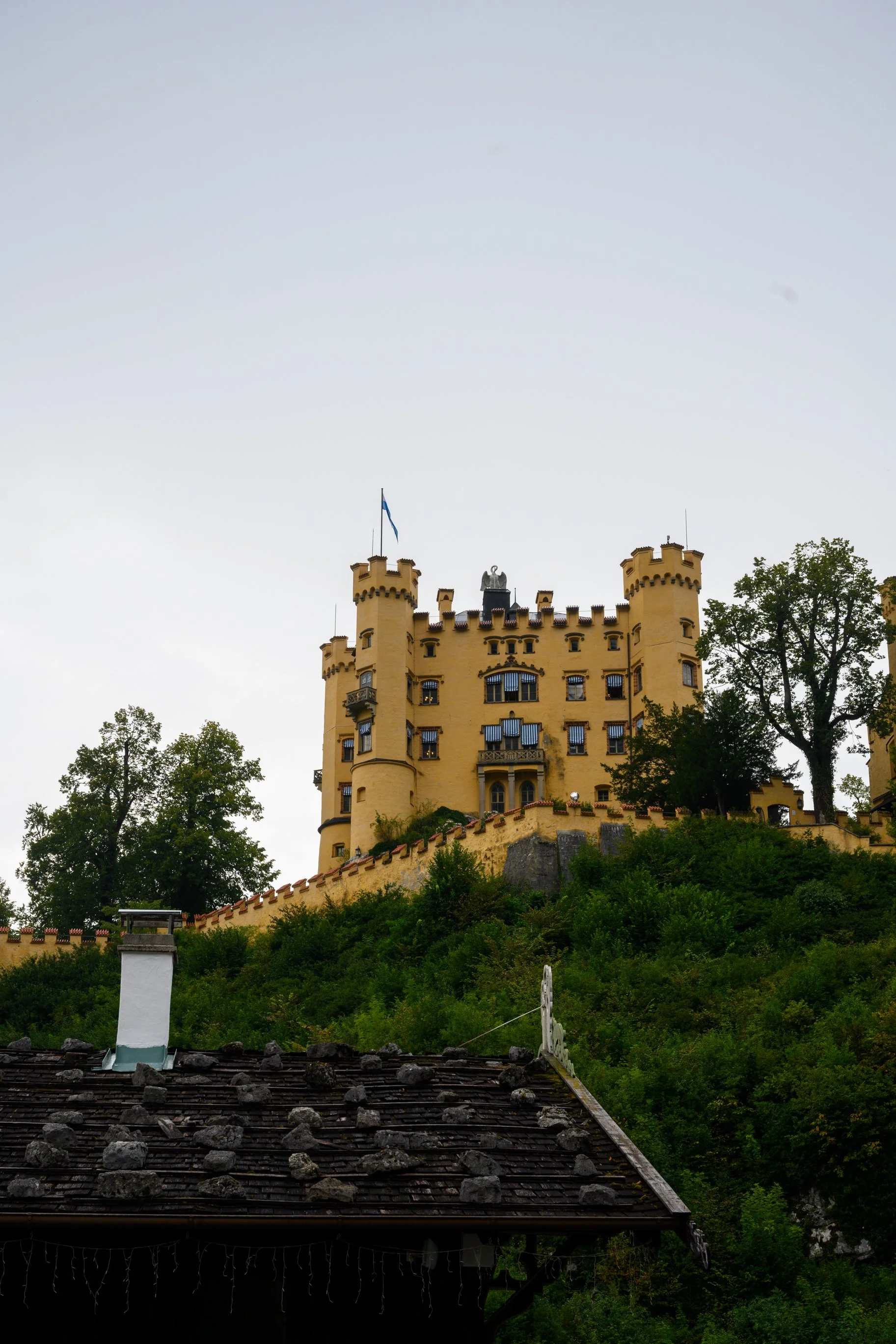
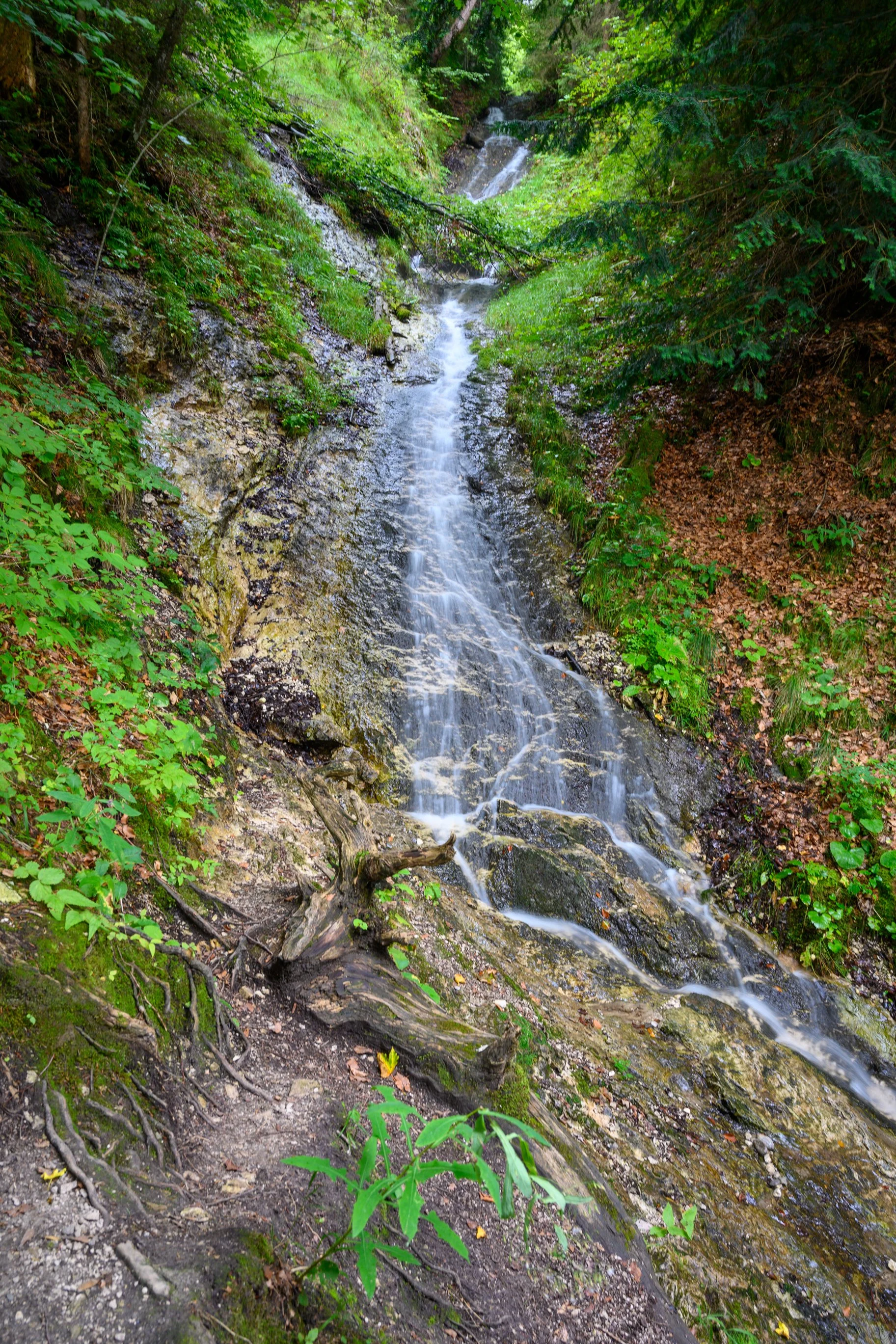
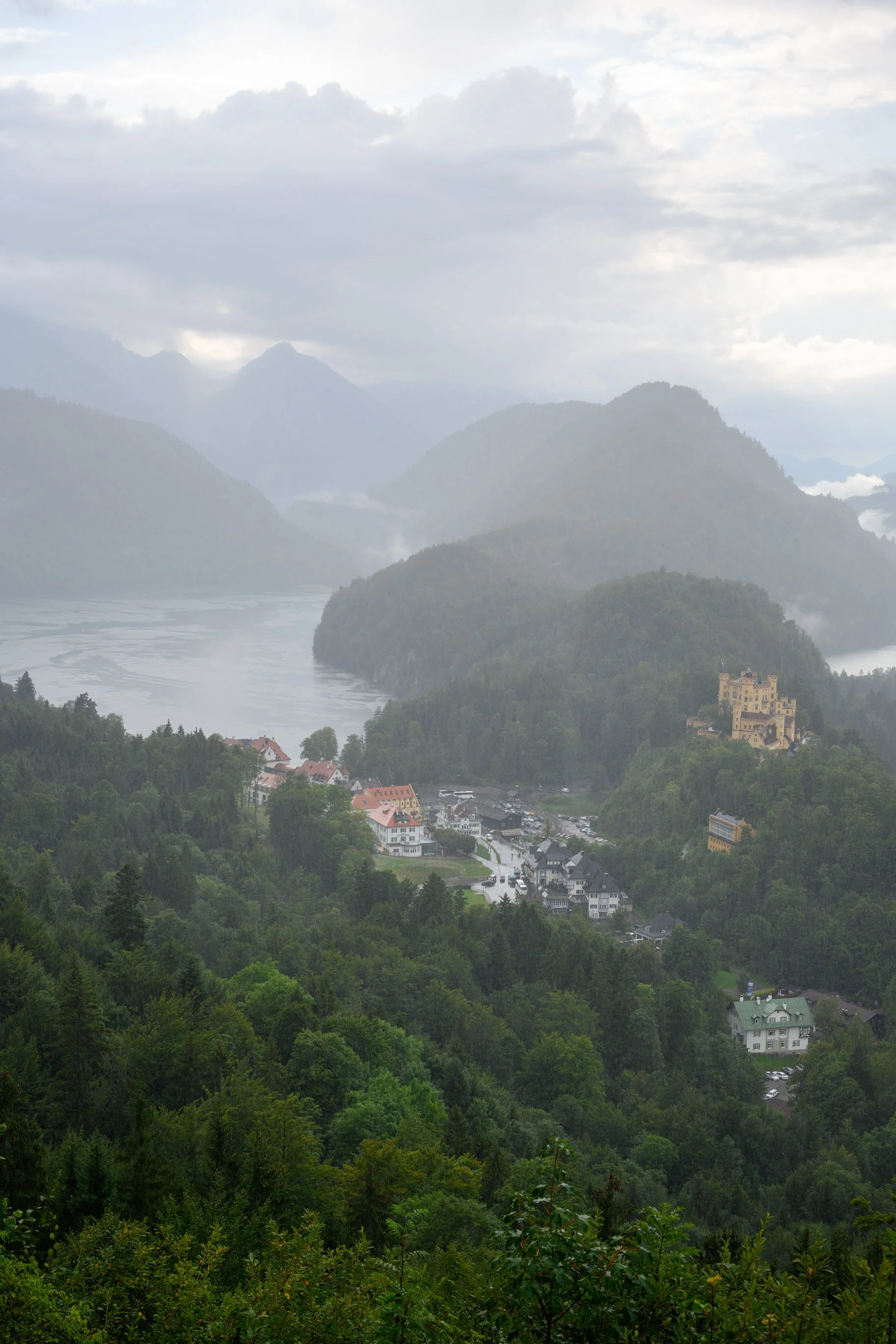
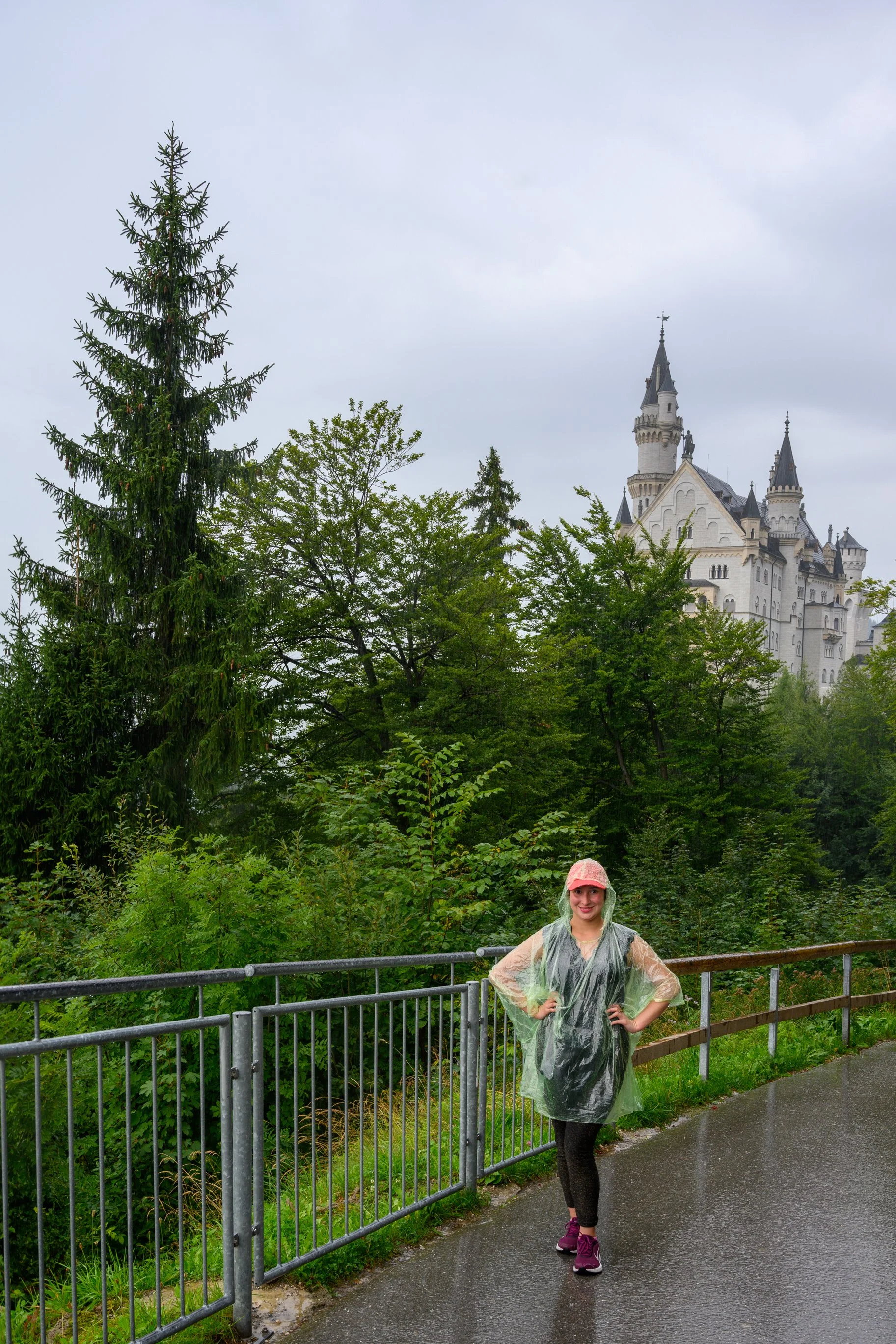
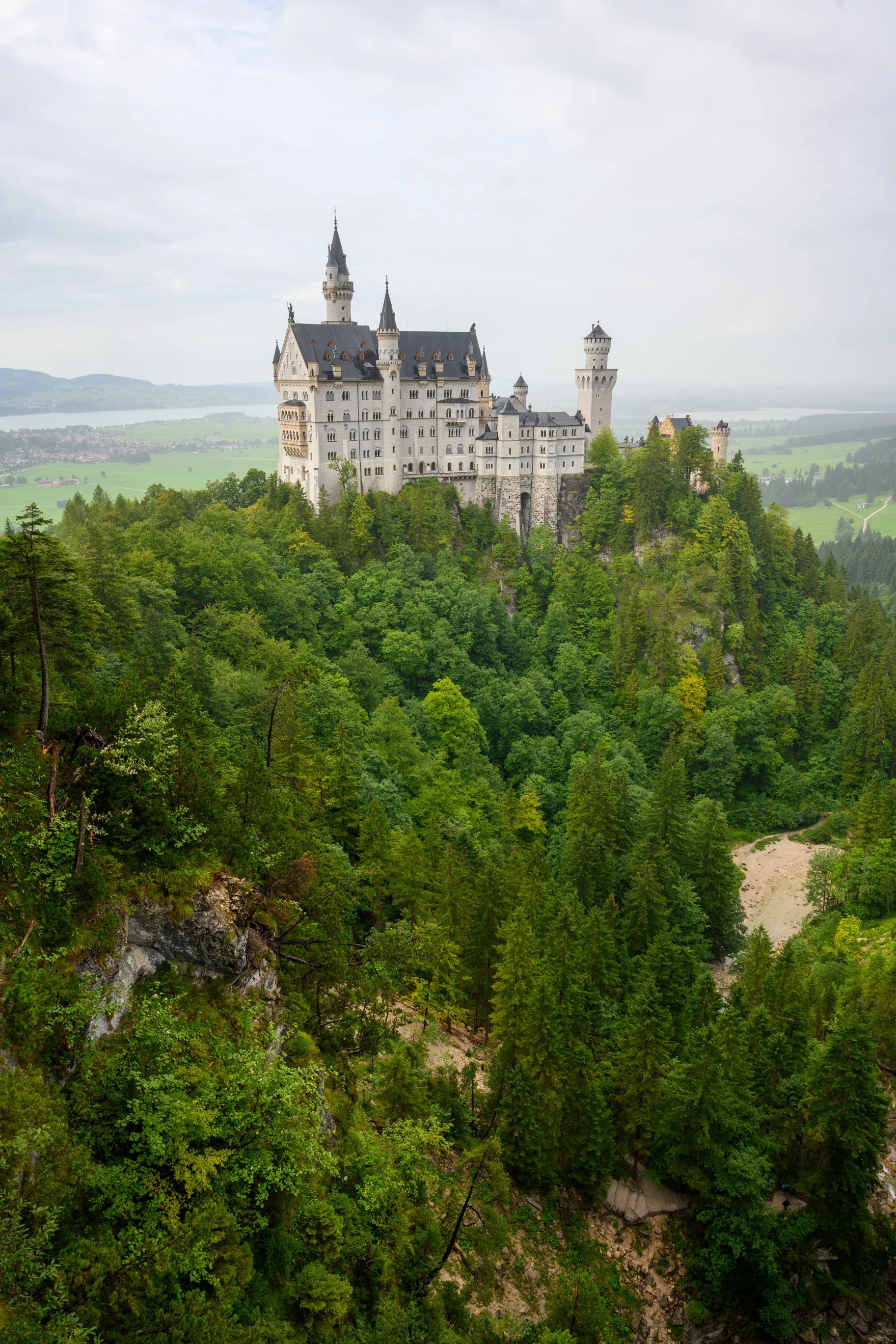
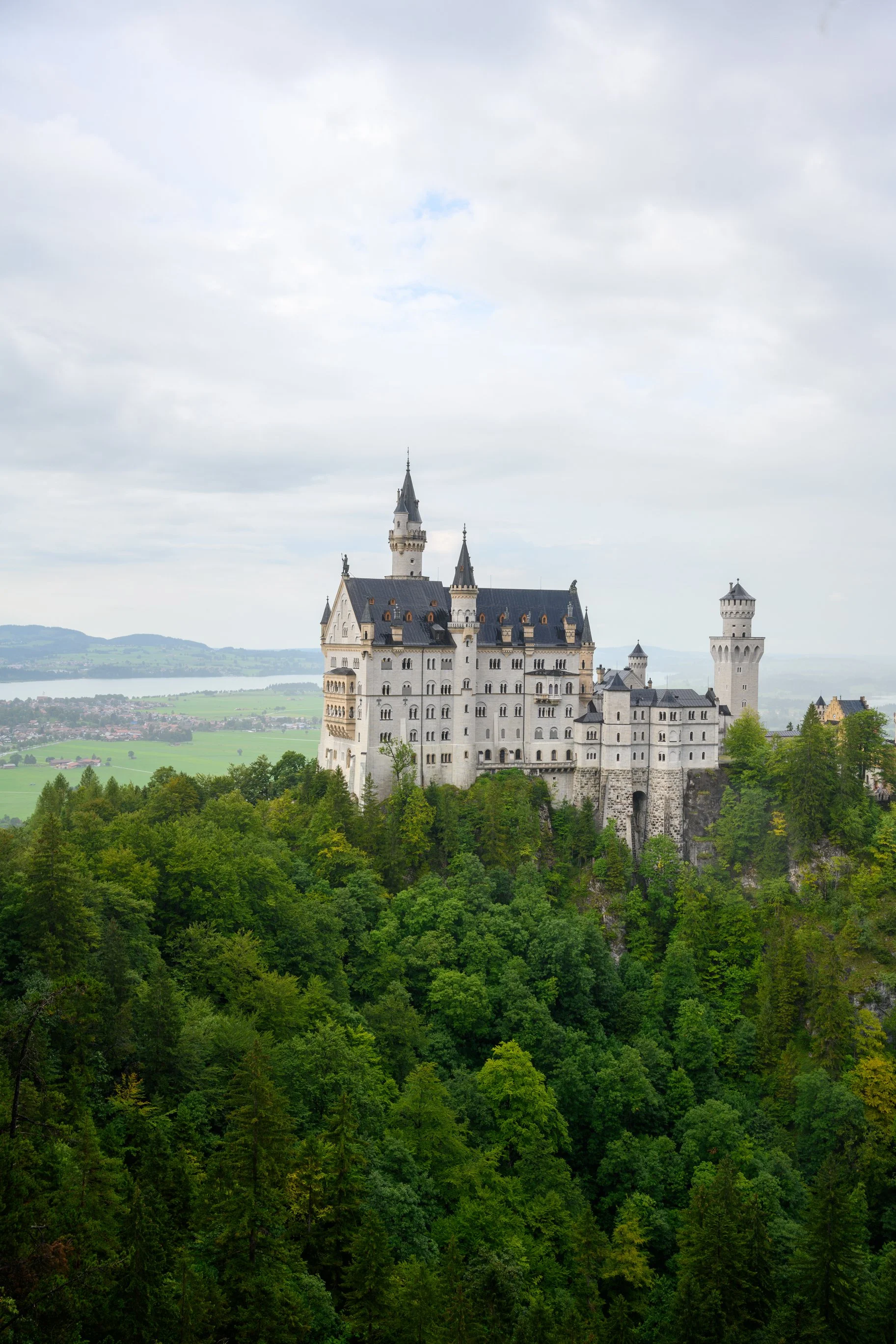
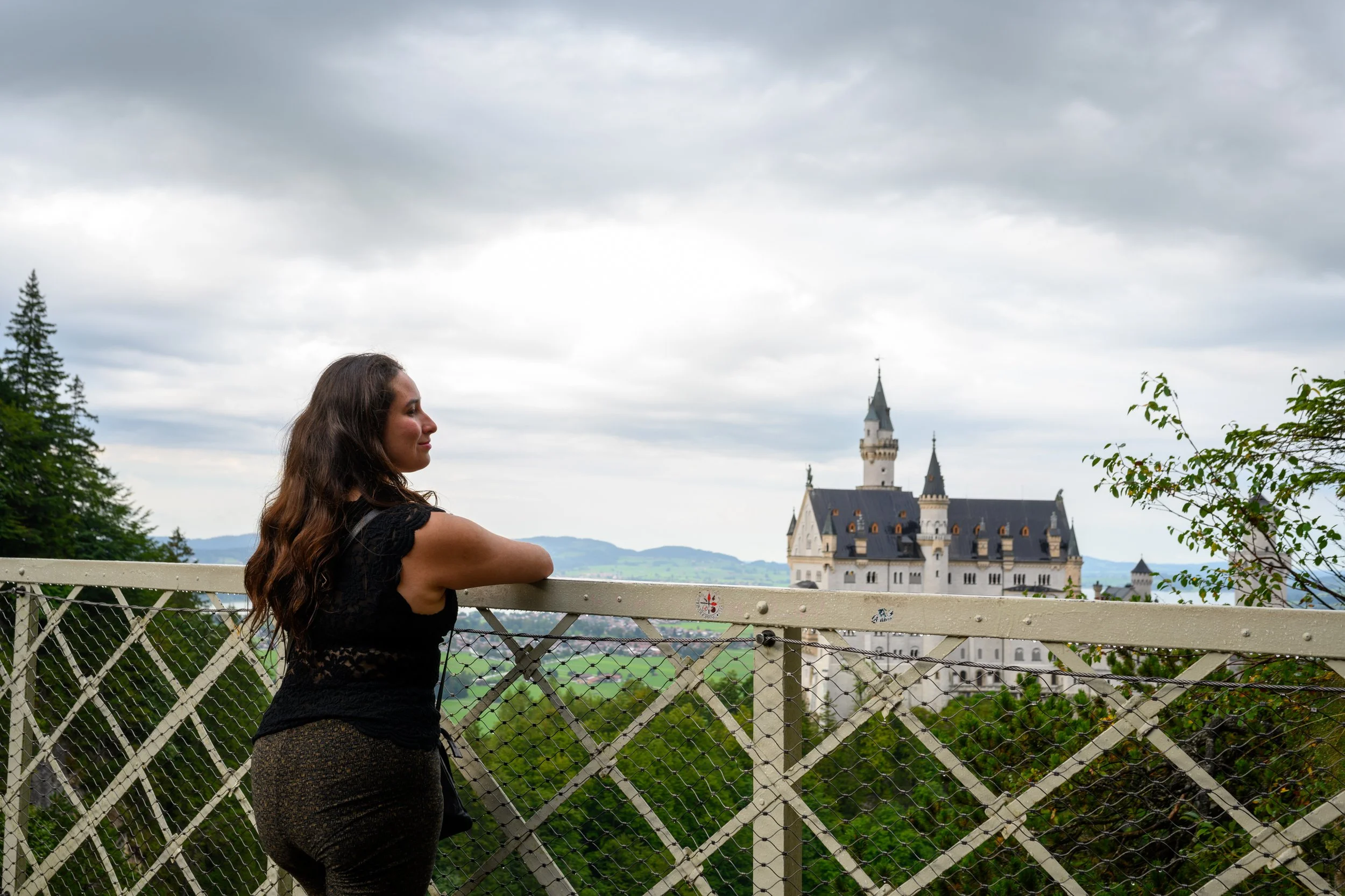
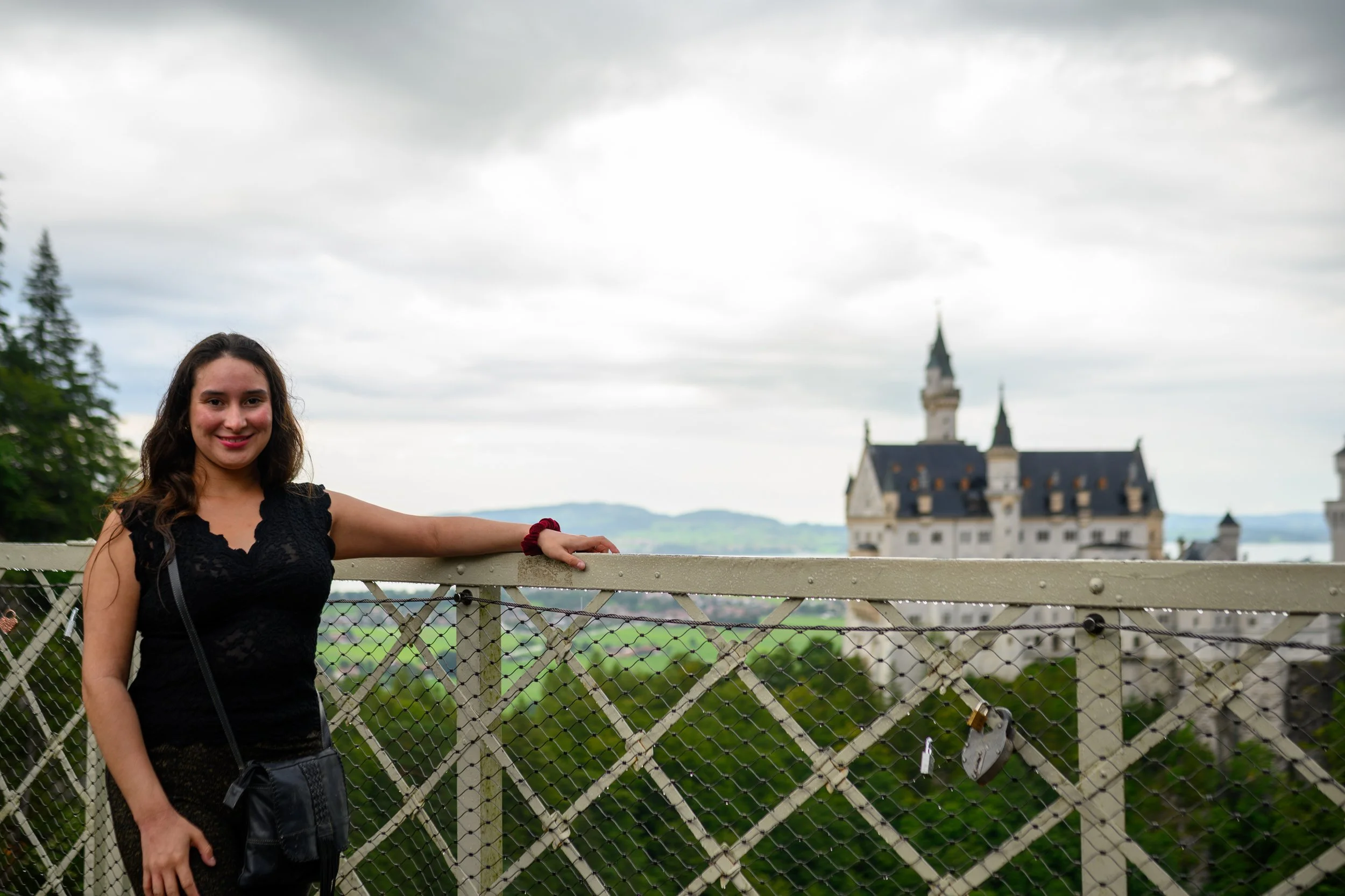
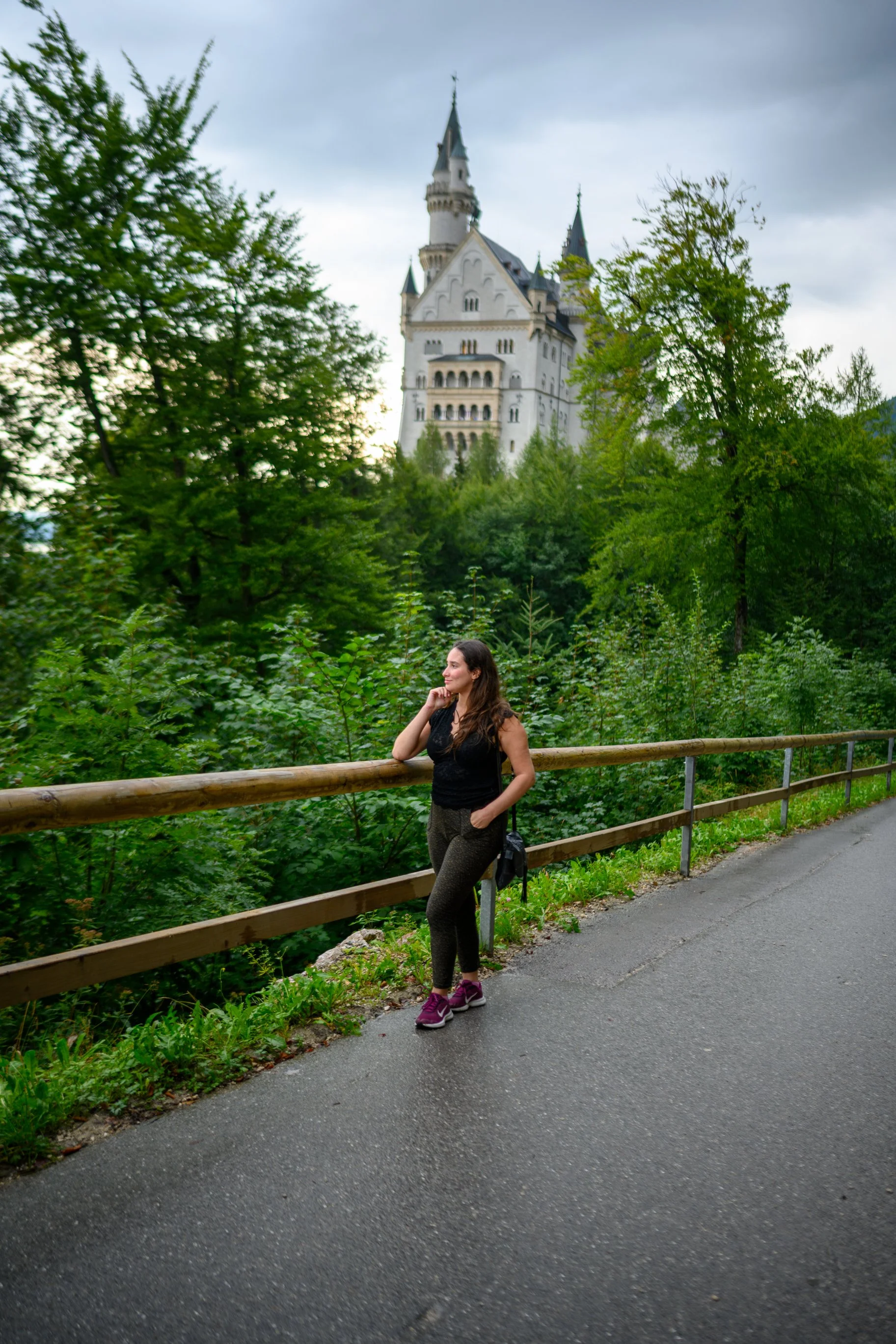
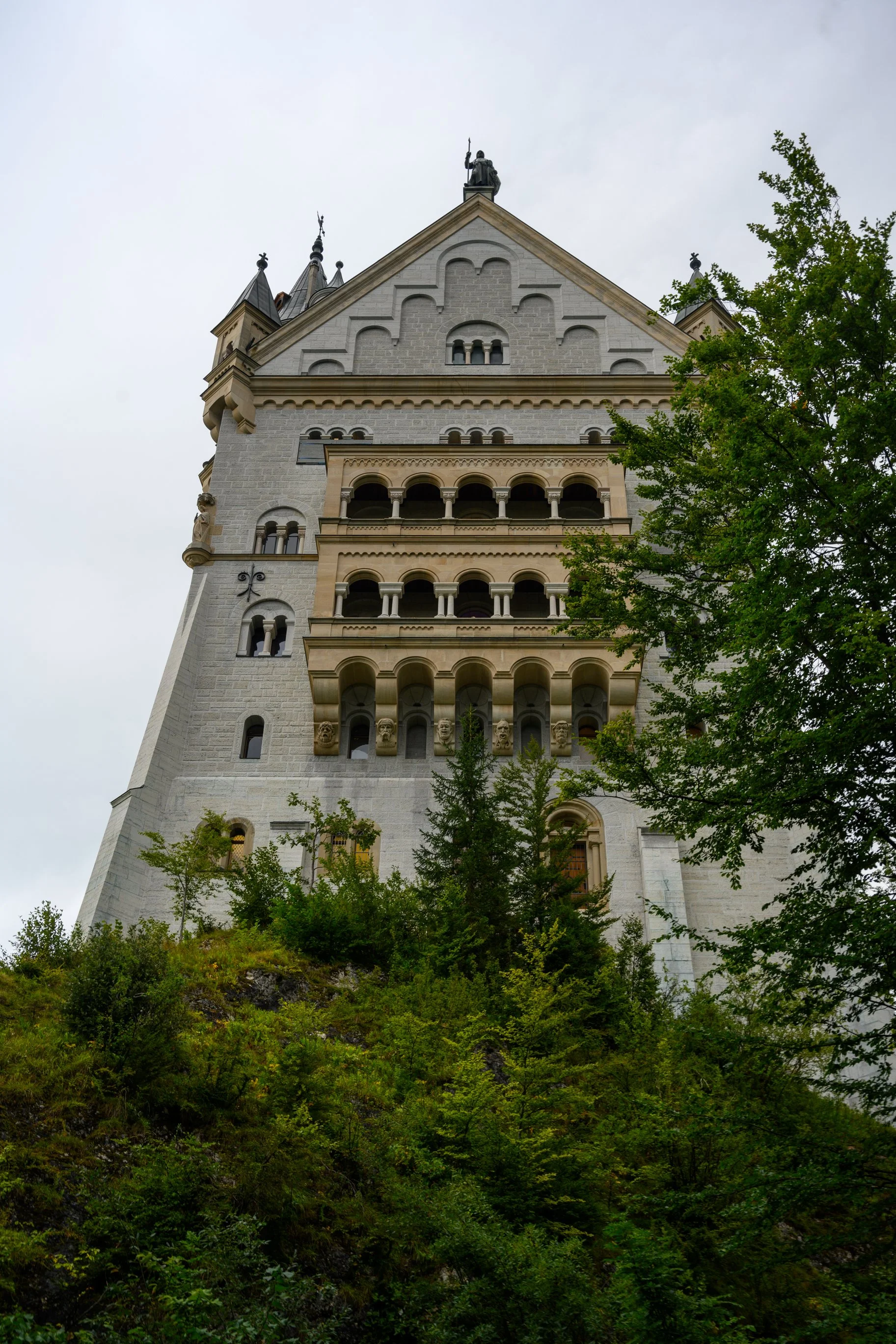
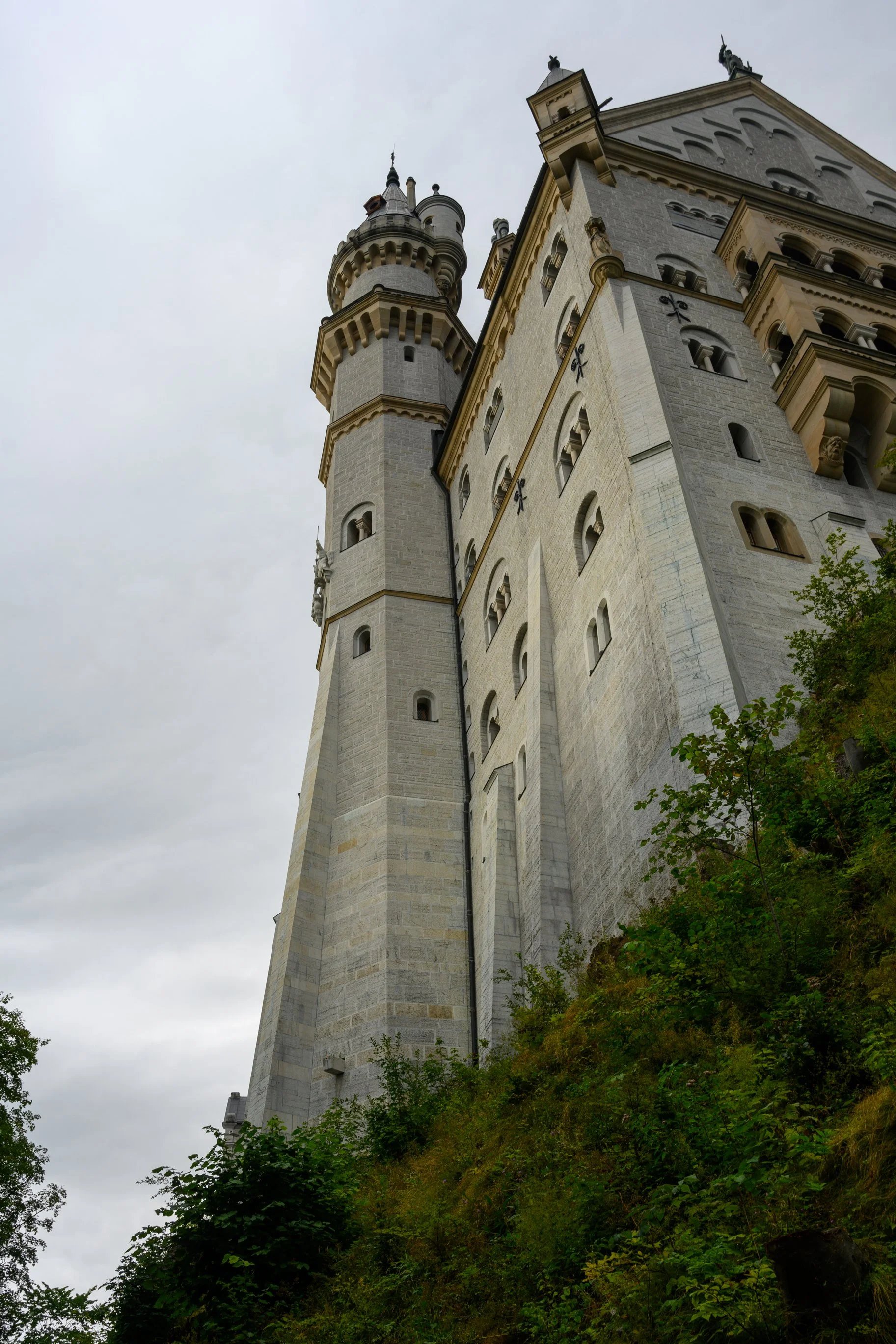
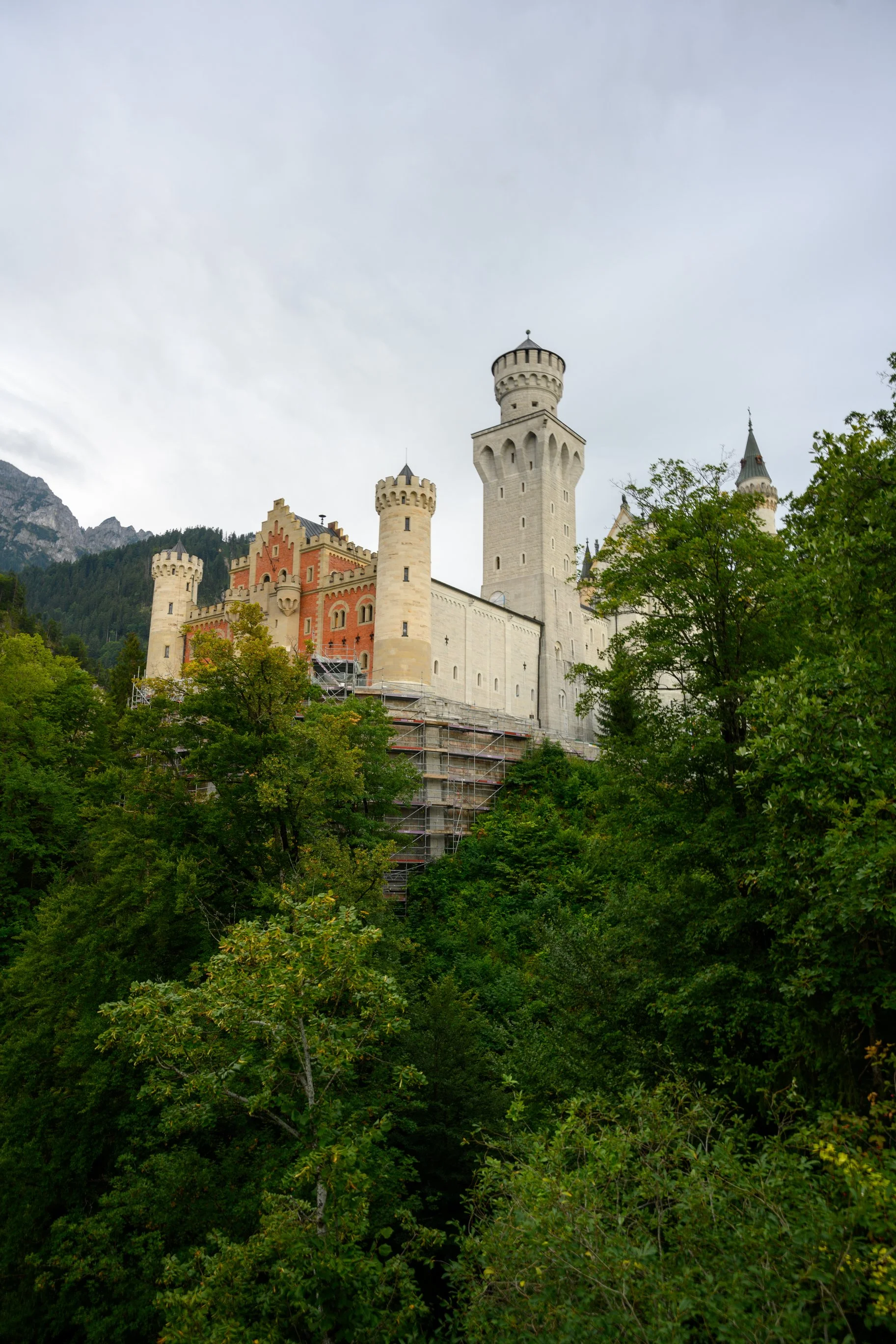
Set high against the rugged peaks of the Allgäu Alps, King Ludwig II’s 19th-century Romanesque Revival retreat is one of Europe's most visually striking landmarks. Emerging out of dense pine forests above the village of Hohenschwangau, the castle’s white limestone walls and slender turrets feel straight out of a storybook. As part of our wider journey through southern Germany, this architectural masterpiece offered an incredible setting for cinematic landscape photography and reinforced our shared ethos: staying in one place is just too boring.
The Journey: Rail to the Bavarian Foothills
Reaching the castle is an experience in itself, starting with a direct regional train ride south from Munich to the border town of Füssen. The roughly two-hour journey cuts beautifully through the quintessential Bavarian countryside.
The Scenic Route: Rolling emerald pastures, traditional timbered farmhouses, and quiet villages slowly give way to the dramatic, jagged wall of the Bavarian Alps rising on the horizon.
The Final Ascent: Stepping off at Füssen, a short connecting local bus drops you directly at the base of the mountains in Hohenschwangau, where the steep ascent up the forested castle hill begins.
Crossing Marienbrücke (Mary’s Bridge)
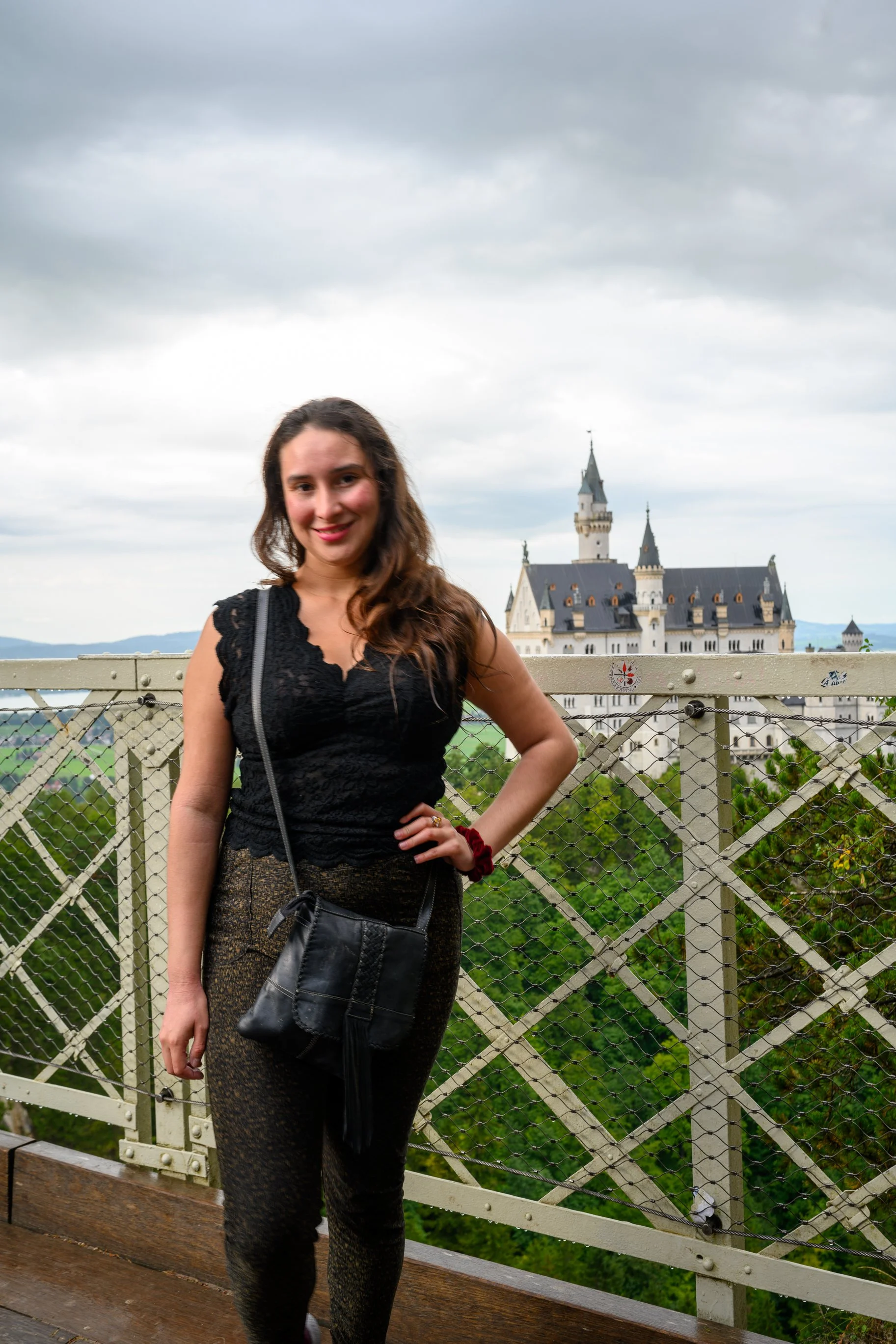
While the approach along the wooded switchbacks is incredibly atmospheric, the defining vista of Neuschwanstein comes from beyond the main castle gates, higher up the mountain at Marienbrücke.
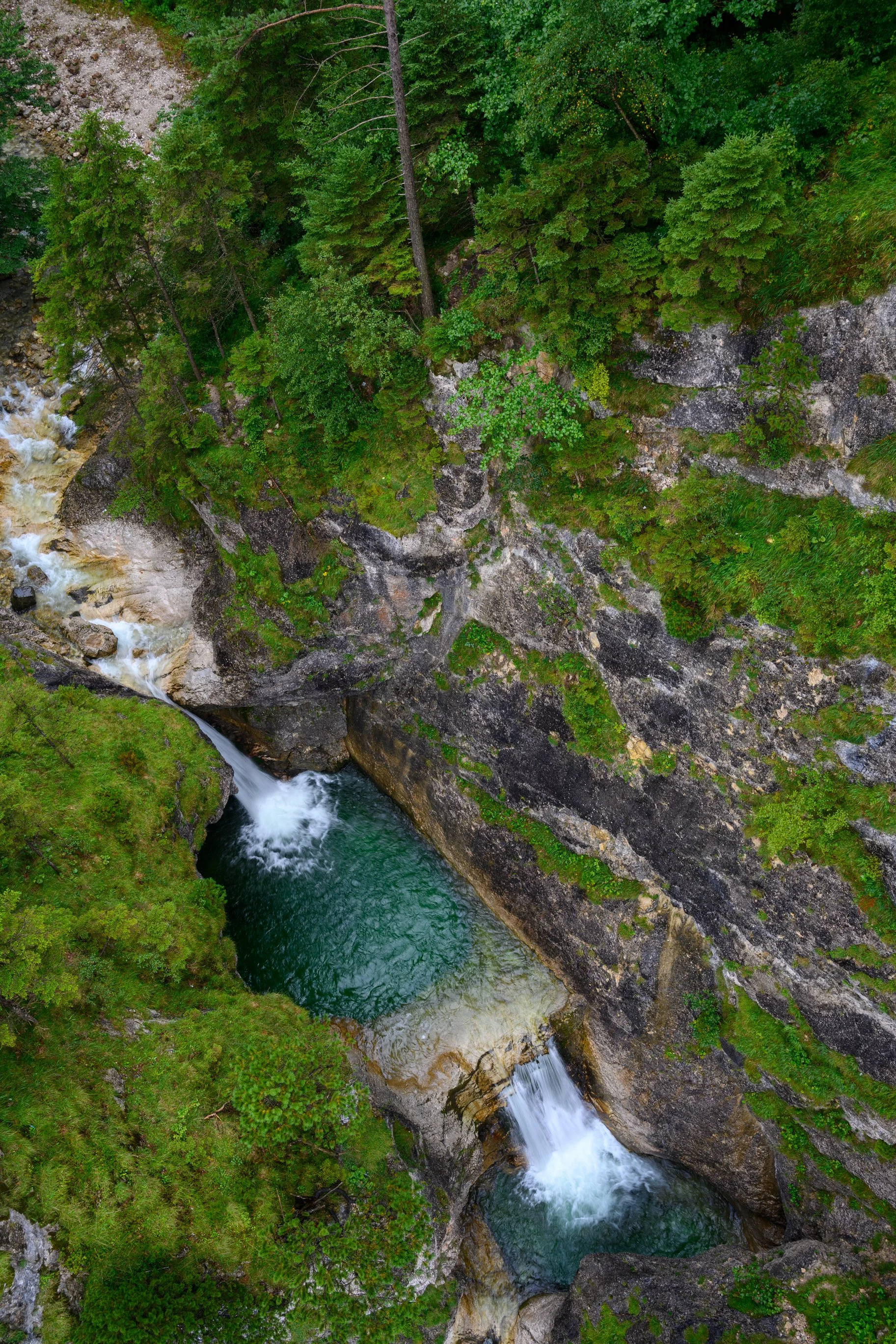
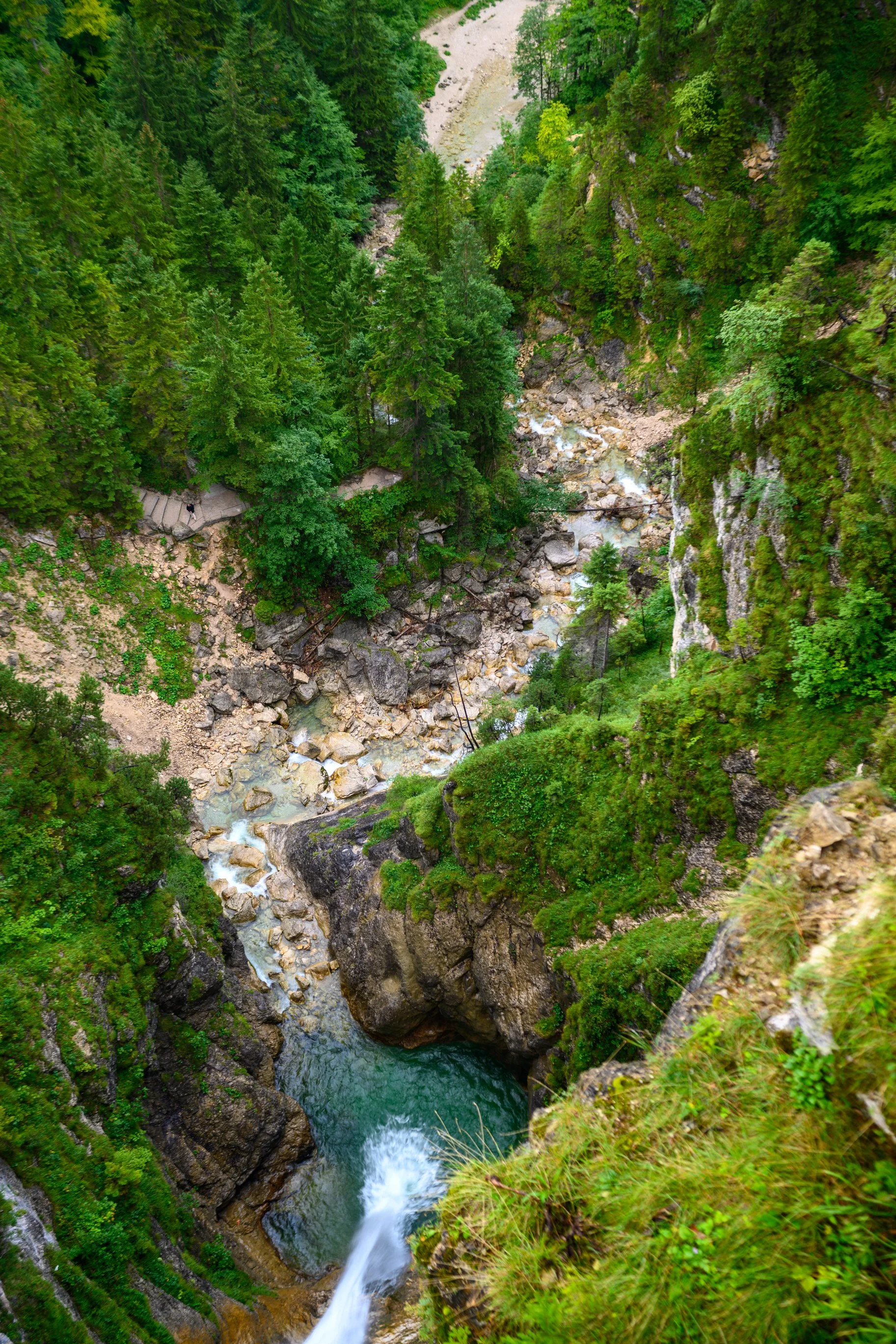
Suspended Over the Gorge: Spanning 90 meters (nearly 300 feet) directly above the churning waters and sheer rock walls of the Pöllat Gorge, this narrow footbridge swings out into the open air.
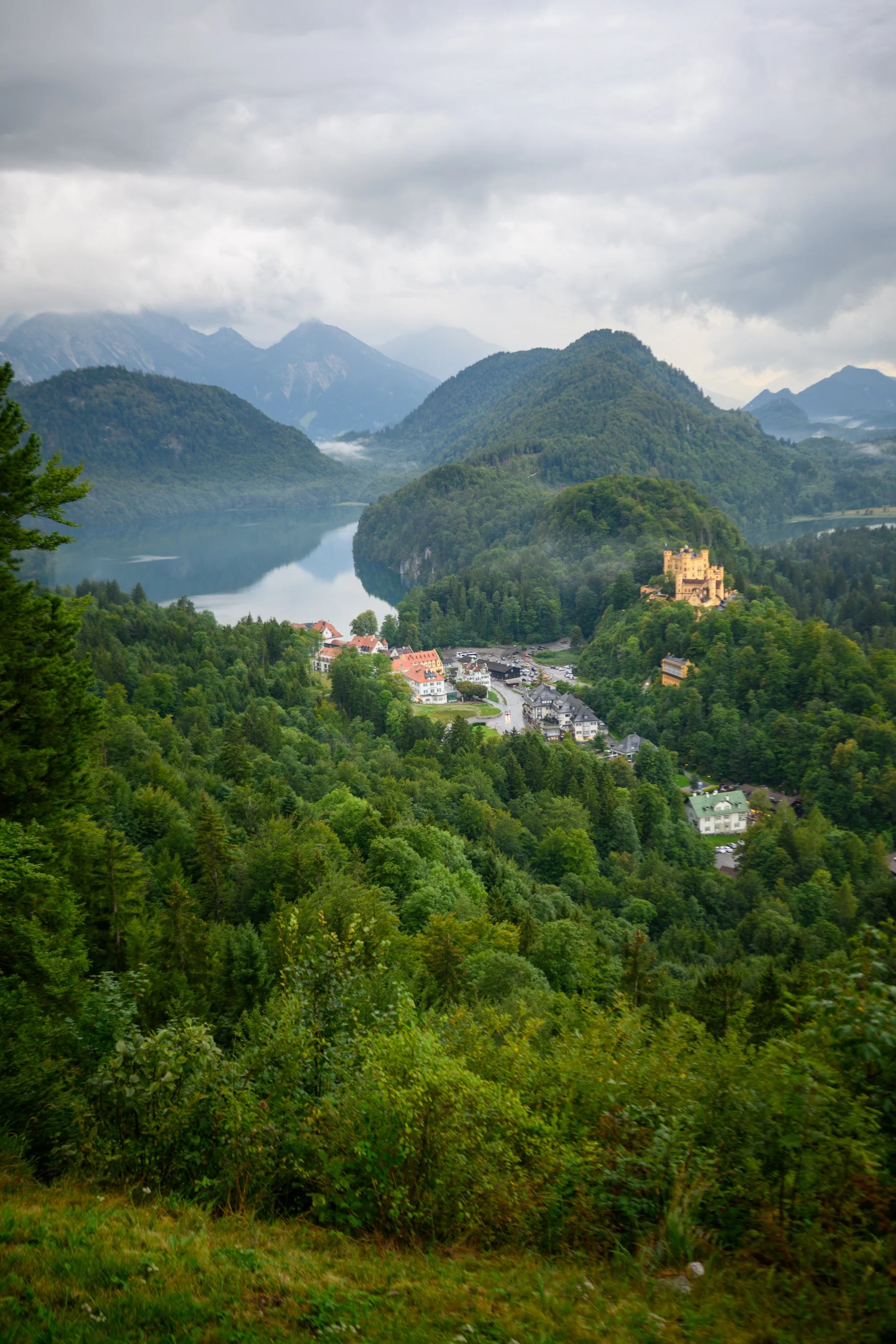
The Postcard Panorama: Looking across the chasm offers unobstructed, side-profile views of the castle’s soaring spires, framed against the Alpsee lake and the sprawling Bavarian plains far below.
Cinematic Scale: It's the most dramatic vantage point for wide-angle shots and cinematic video walkthroughs, perfectly capturing the castle's colossal scale against the raw alpine environment.
Is Neuschwanstein Worth the Trip?
Absolutely. The combination of grand 19th-century architecture and raw, dramatic mountain scenery creates a visual experience that is impossible to replicate. Taking a day away from Munich's urban pace to hike into the Bavarian Alps perfectly balances a German itinerary, delivering the ultimate blend of royal history and natural beauty.