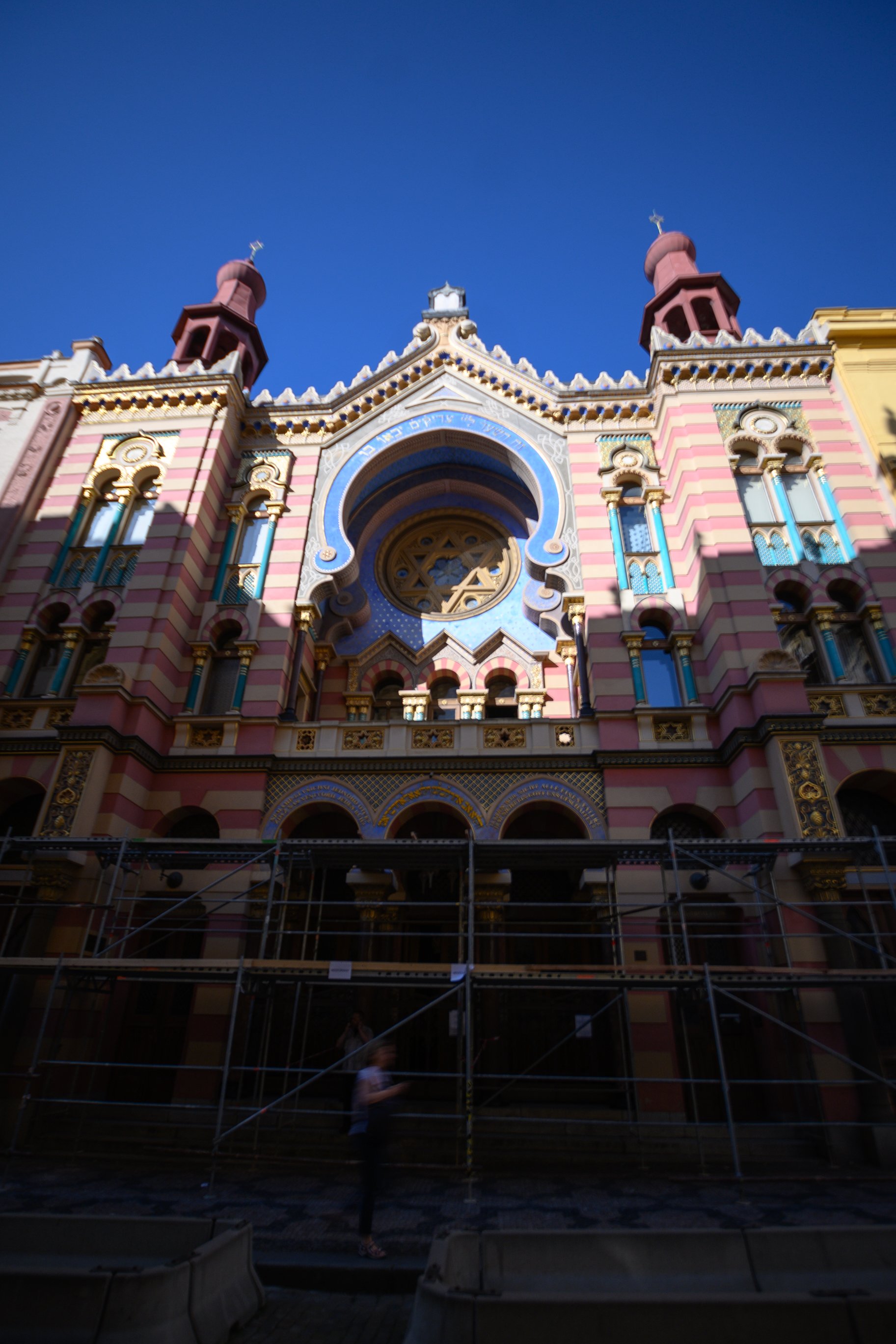
Prague is a remarkably preserved European capital defined by its sweeping Gothic architecture, vibrant cobblestone squares, and a skyline famously punctuated by hundreds of spires. Divided by the Vltava River, the city offers a brilliant visual contrast between the monumental scale of the castle district on one bank and the dense, winding history of the Old Town on the other.
While many European cities wear their history purely on their facades, Prague also hides incredible interior architectural details. Our time here was spent shifting from the awe-inspiring heights of towering stone cathedrals to seeking out striking early 20th-century Cubist designs tucked behind unassuming doors.
The Old Town Square and the Astronomical Clock
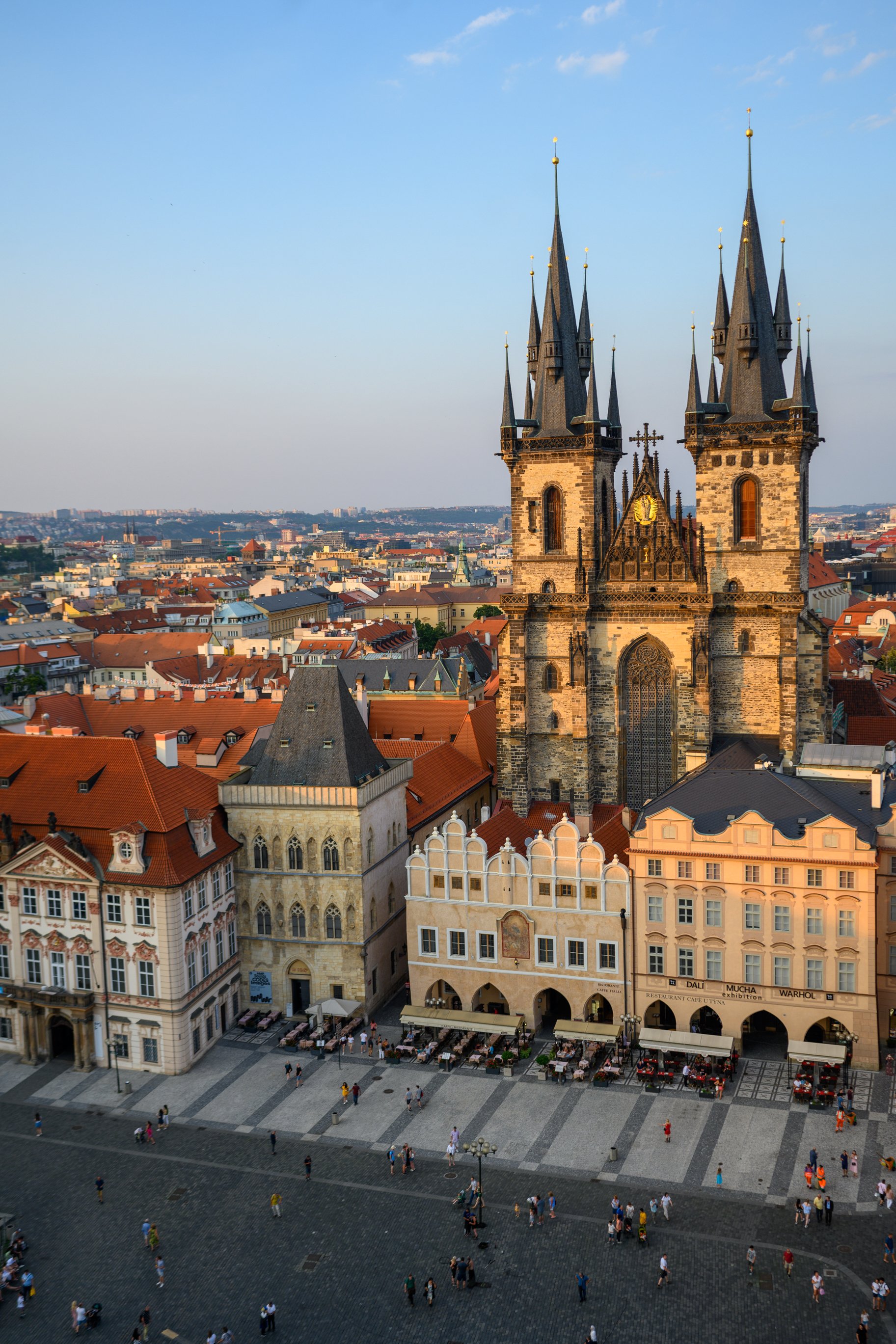
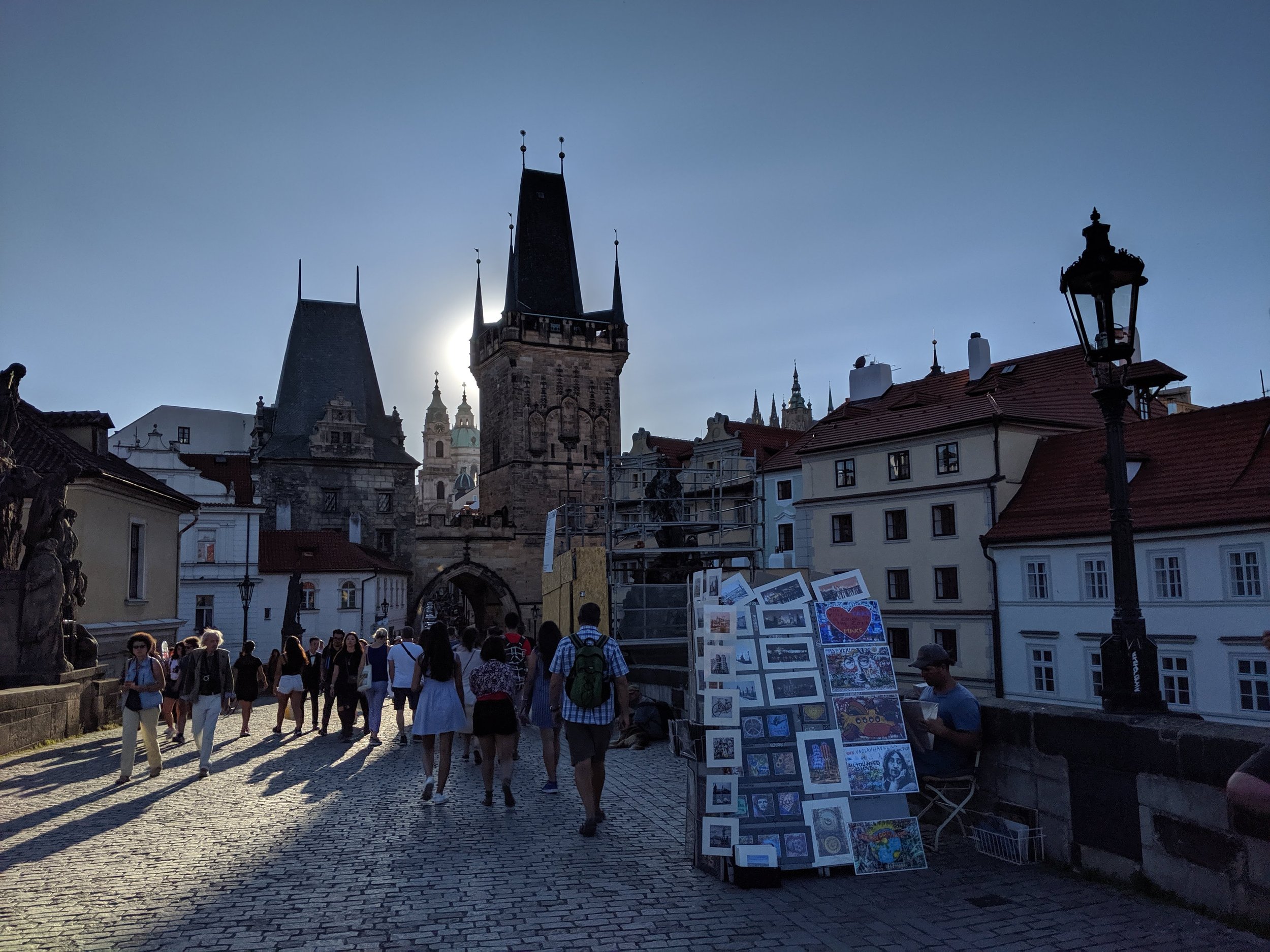
At the city's heart lies the Old Town Square, an expansive plaza that anchors any visit. Looking down over the historic centre, the imposing, dark Gothic spires of the Church of Our Lady before Týn completely dominate the skyline. Bathed in late afternoon sun, the golden light striking the dark stone creates an incredibly moody, cinematic atmosphere that feels completely detached from the modern world.
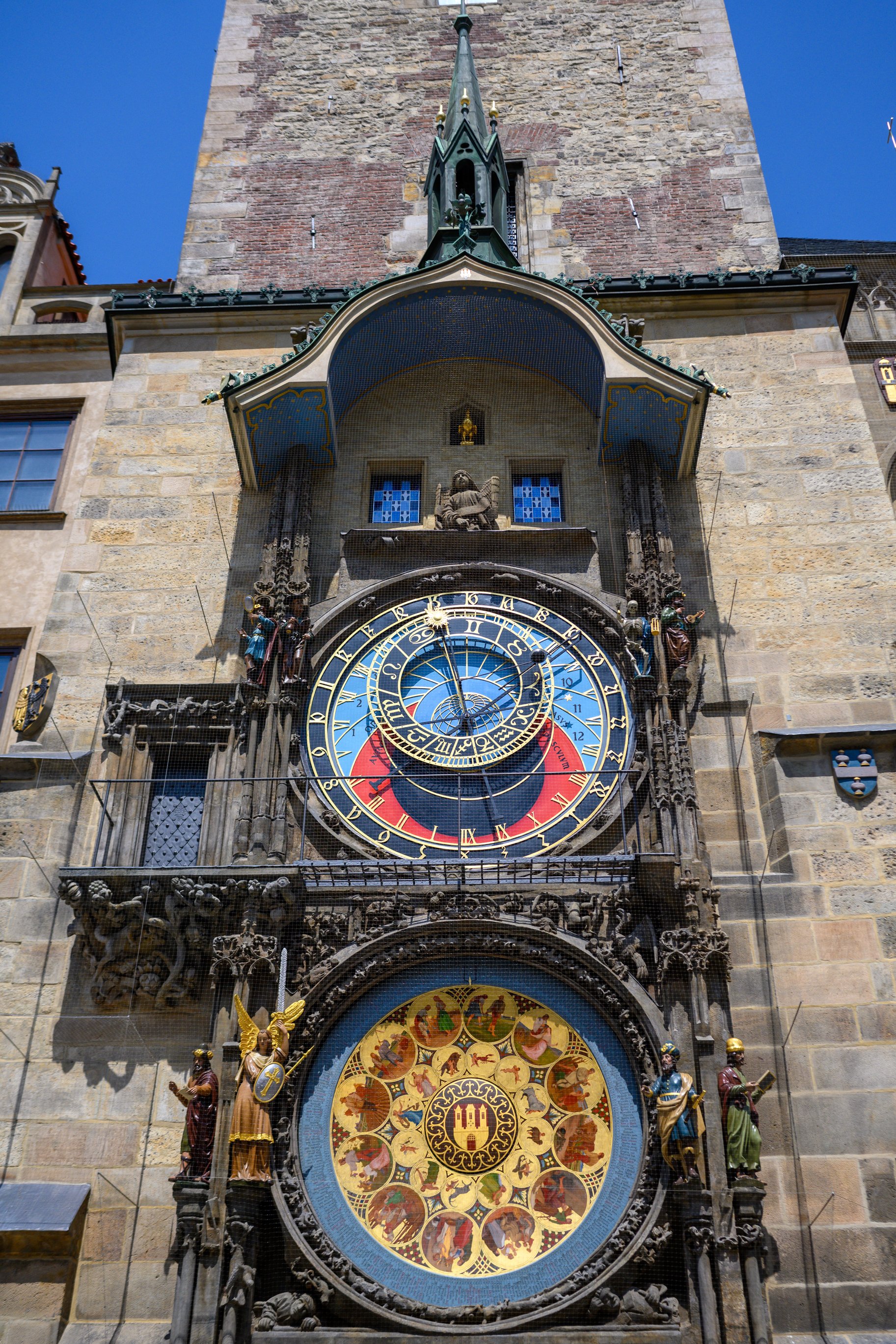
Mounted on the southern wall of the Old Town Hall is one of Prague's most famous engineering marvels: the Astronomical Clock, or Orloj. Dating back to the 15th century, it is the oldest astronomical clock still in operation. Admiring the incredibly intricate, multi-layered dials, gilded astronomical details, and the procession of the Apostles provides a fascinating glimpse into medieval craftsmanship.
St. Vitus Cathedral and the Castle District
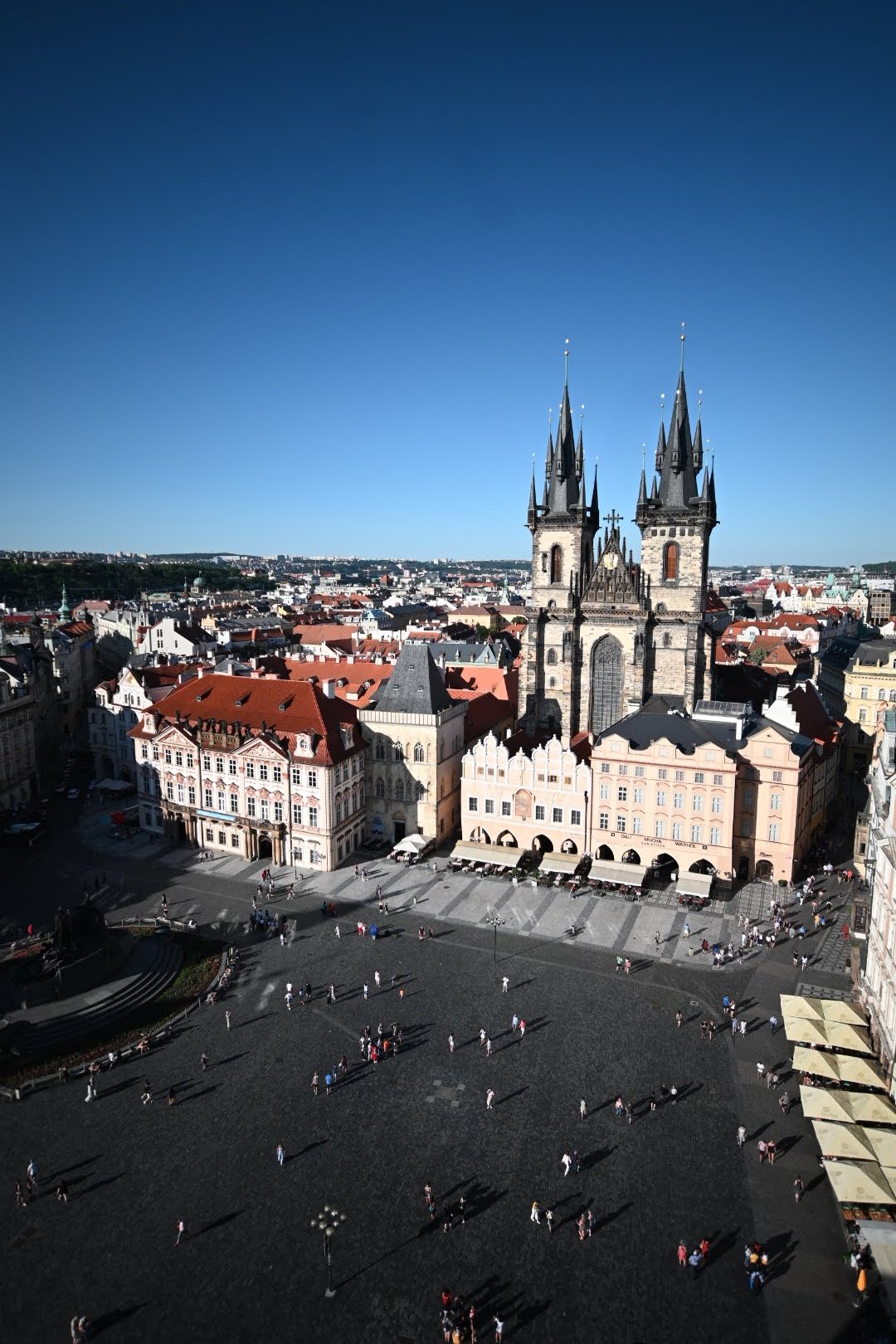
Crossing the Vltava River and ascending the hill brings you into the sprawling Prague Castle complex, a district that feels like a city unto itself. The undisputed centrepiece here is St. Vitus Cathedral.
The sheer, monumental scale of this Gothic masterpiece leaves you breathless. Standing at its base, the eye is immediately drawn upward along the flying buttresses and the incredibly detailed stone carvings that have weathered centuries of history. The massive rose window above the portal reveals a level of geometric precision and stained-glass artistry that demands to be photographed.
St. Vitus Cathedral and the Castle District
Crossing the Vltava River and ascending the hill brings you into the sprawling Prague Castle complex, a district that feels like a city unto itself. The undisputed centrepiece here is St. Vitus Cathedral.
The sheer, monumental scale of this Gothic masterpiece leaves you breathless. At its base, your eye is immediately drawn upward along the flying buttresses and the incredibly detailed stone carvings that have weathered centuries of history. The massive rose window above the portal reveals a level of geometric precision and stained-glass artistry that demands to be photographed.
Tower Vantage Points and the Sea of Red Rooftops
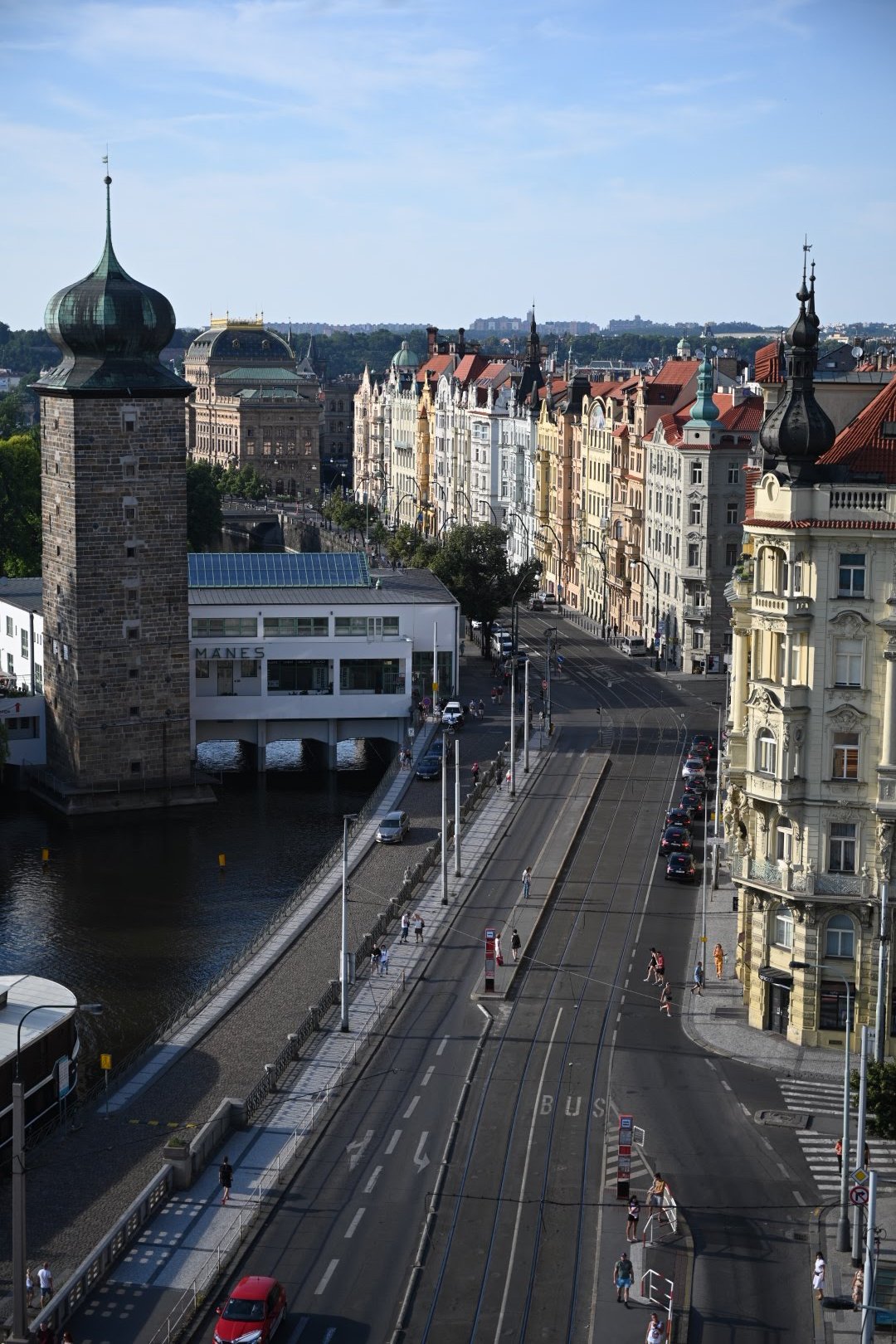
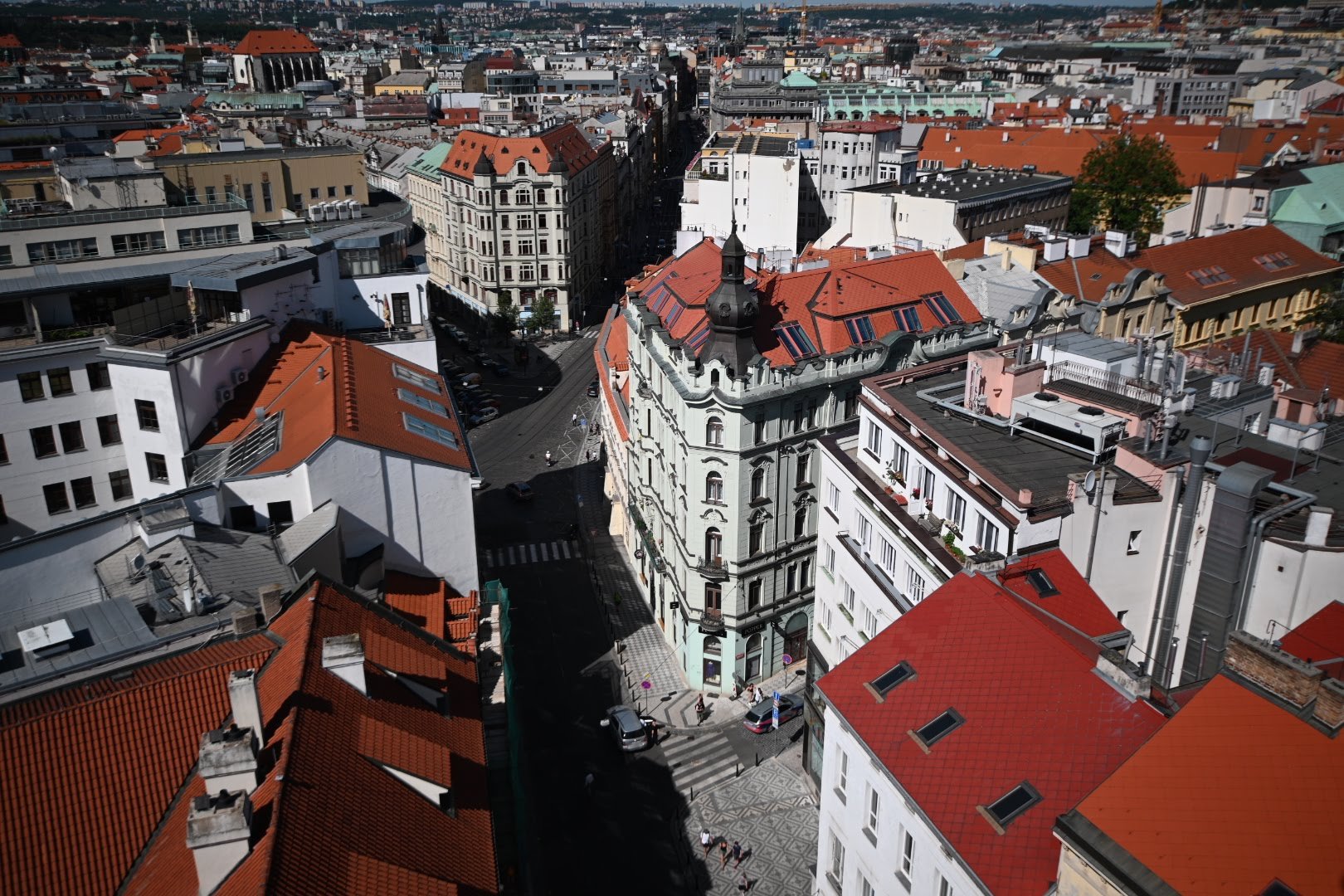
To truly appreciate Prague's layout, you have to get above street level. The city is famous for its towers, and climbing them offers some of Europe's most rewarding photographic perspectives.
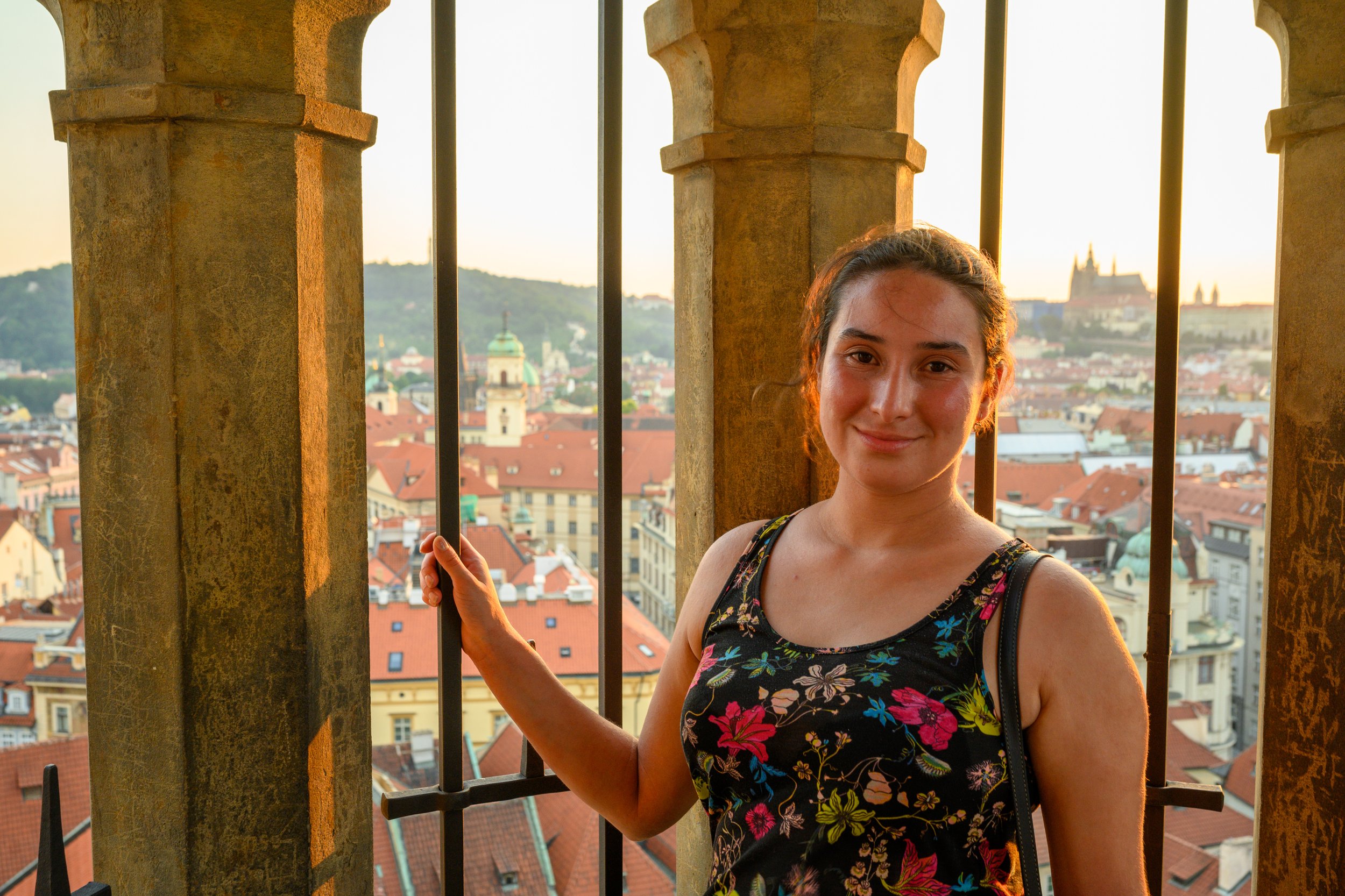
Golden-hour light from a high vantage point transforms the city. Looking out over the iconic sea of terracotta red rooftops stretching toward the distant castle district offers a breathtaking panorama. Framing portraits between the thick stone pillars and ironwork of these historic towers adds a natural, timeless border to the sweeping urban landscape behind.
Unique Stairwells and Interior Architecture
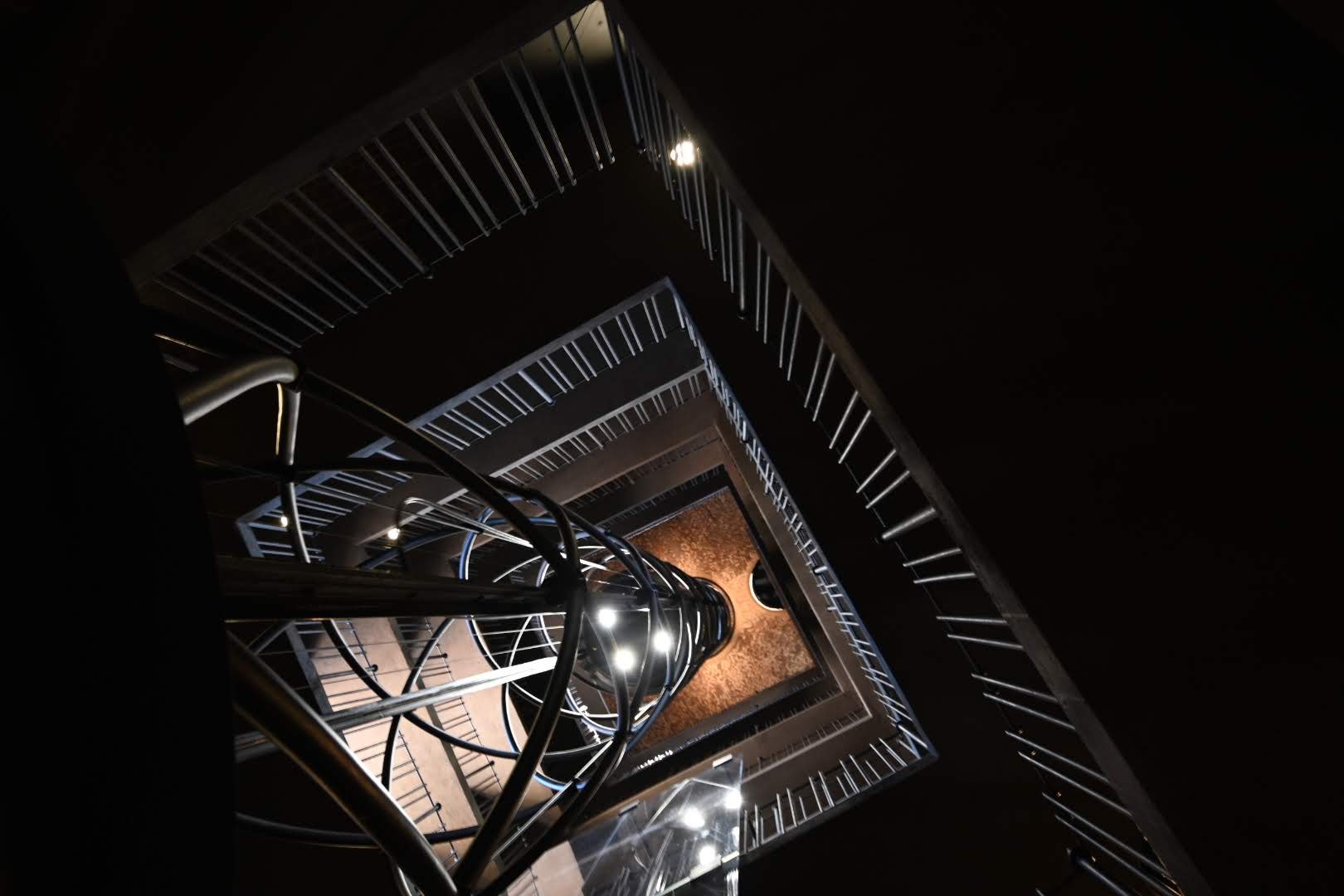
Beyond its classic medieval landmarks, one of the most rewarding aspects of exploring Prague is seeking out its fascinating interior designs. The city embraced the Cubist movement in the early 20th century like few other places, applying its sharp, geometric principles directly to architecture.
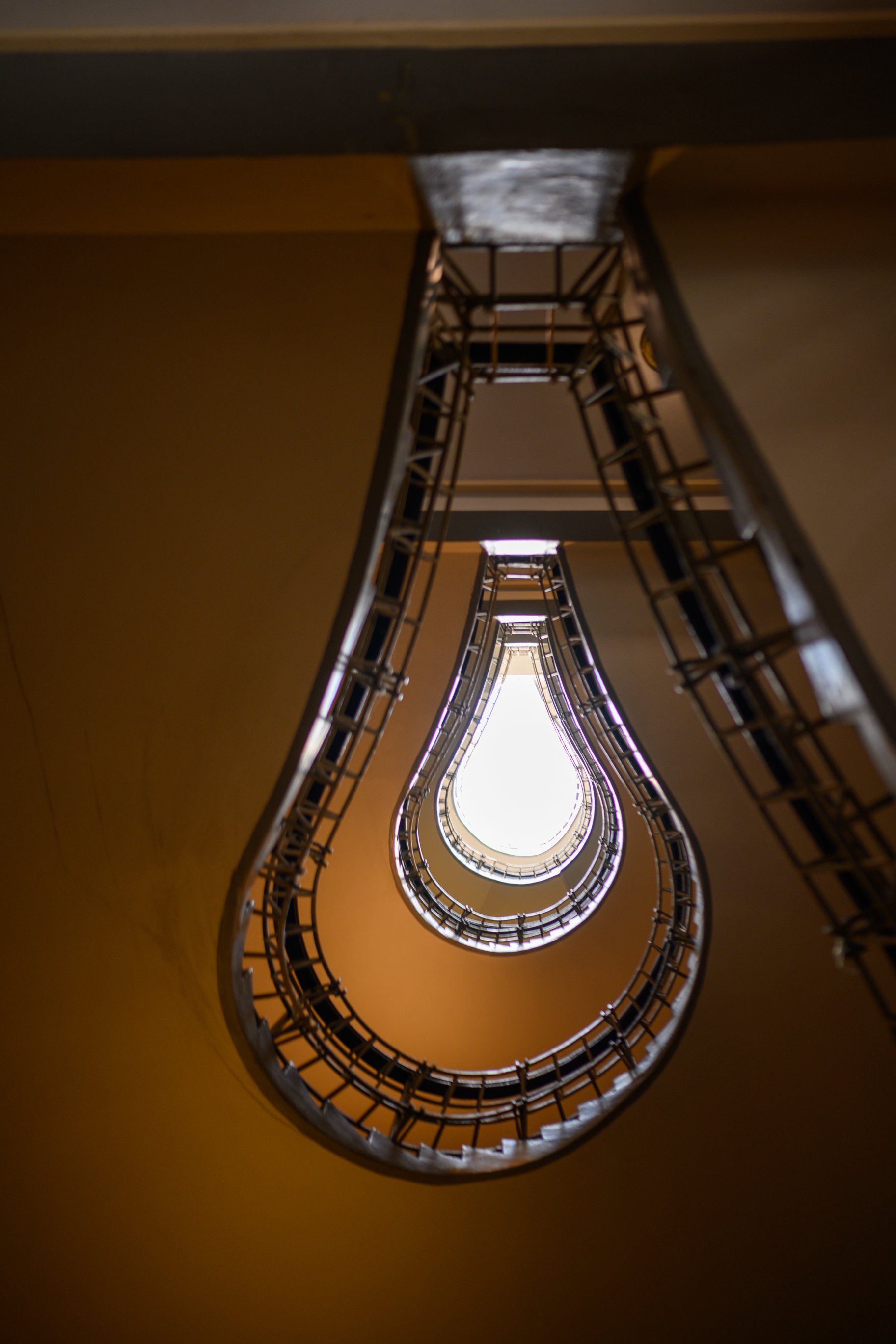
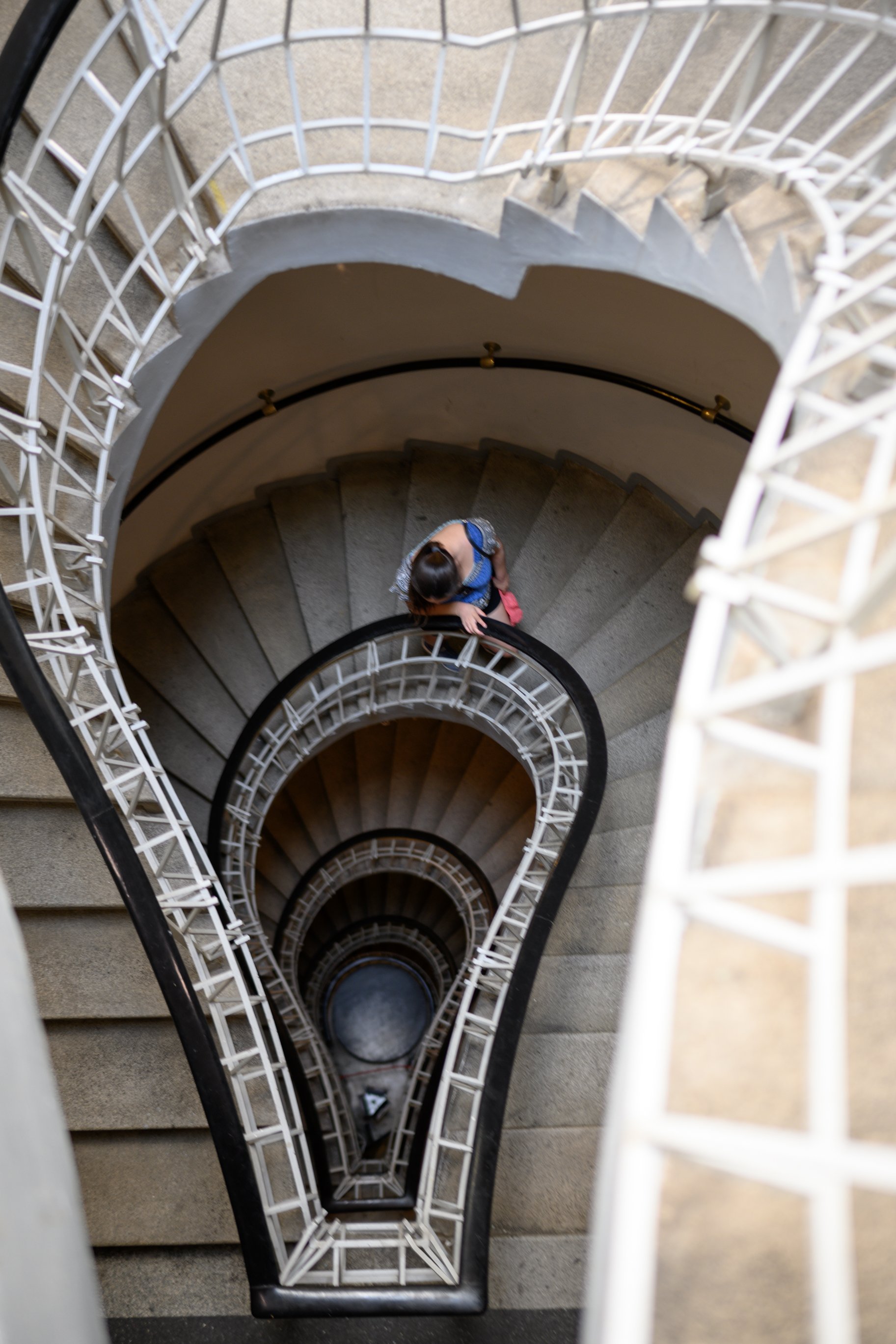
Walking into the House of the Black Madonna reveals one of the city's most famous hidden photographic gems. Looking straight down the sweeping, lightbulb-shaped Cubist staircase provides a mind-bending, elegant composition of white railings and dark stone steps. Architectural surprises continue elsewhere in the city, shifting from flowing staircases to the harsh, geometric, illuminated metalwork of striking historical elevator shafts.
Photographing Prague
Prague is an exceptionally versatile photography destination. The juxtaposition of moody Gothic stonework, brightly painted Renaissance facades, and bold Cubist interiors means you are constantly shifting your creative perspective.
A few things to consider when framing the Czech capital:
Chase the high ground: The Old Town Hall Tower and the towers anchoring the Charles Bridge offer unparalleled views of the red rooftops and winding streets below.
Look inside: Don't just photograph the facades. Walk into public buildings, museums, and cafes to find incredible spiral staircases and Art Deco details.
Embrace the golden hour: The dark stone of the Gothic churches takes on a beautiful, warm glow right before sunset, completely transforming the mood of the squares.
Focus on the details: The sheer density of astronomical clocks, stone gargoyles, and wrought-iron street lamps means a telephoto lens is just as useful as a wide-angle.
Is Prague Worth Visiting?
Without a doubt. Prague delivers a travel experience that balances heavy, monumental history with a highly walkable, romantic atmosphere. It feels distinctly different from Vienna's imperial avenues or Hallstatt's quiet alpine charm, offering a dense, winding labyrinth of architecture that begs to be explored without a map.
If you are planning a trip, three days gives you enough time to comfortably cross the Charles Bridge at dawn, explore the castle district, and still wander the Old Town for traditional Czech pastries and hidden architectural gems.
Continuing Our Journey Through Europe
Prague was a stunning addition to our travels, providing a rich canvas of Gothic spires and unforgettable vantage points. From the heights of the stone towers to the depths of its Cubist stairwells, the city offered endless visual inspiration.
Travelling is about more than ticking off landmarks; it is about seeking out hidden details, capturing changing light, and experiencing a destination's unique architectural heartbeat.
You can continue exploring our European journeys through our other articles:
Brussels, Belgium – Grand architecture, historic guildhalls, and surrealist horizons.
Bruges, Belgium – Medieval canals, cobblestone squares, and timeless romance.
Salzburg, Austria – Alpine backdrops, churches, and Hohensalzburg Fortress.
Vienna, Austria – Imperial palaces and historic avenues.
We hope our photographs and experiences inspire you to add Prague to your own European itinerary.